
The context
Smart Grid connected Myko’s electric radiators to a demand-response programme. Customers would receive a financial reward for letting their heating make temporary adjustments to help balance the electricity grid.
Participants had limited prior understanding of demand response. The design had to explain the service, the commitment and the choices available once they joined.
Designed and tested before launch. The programme did not reach a live rollout, so there are no adoption or energy-impact results.
01.From discovering to joining.
The service needed to fit into familiar moments in Myko, while making an unfamiliar programme understandable. From those entry points, the journey explained who could join, what they were committing to and what happened next.
Discover from the home page
The programme appeared alongside the radiators people already used.
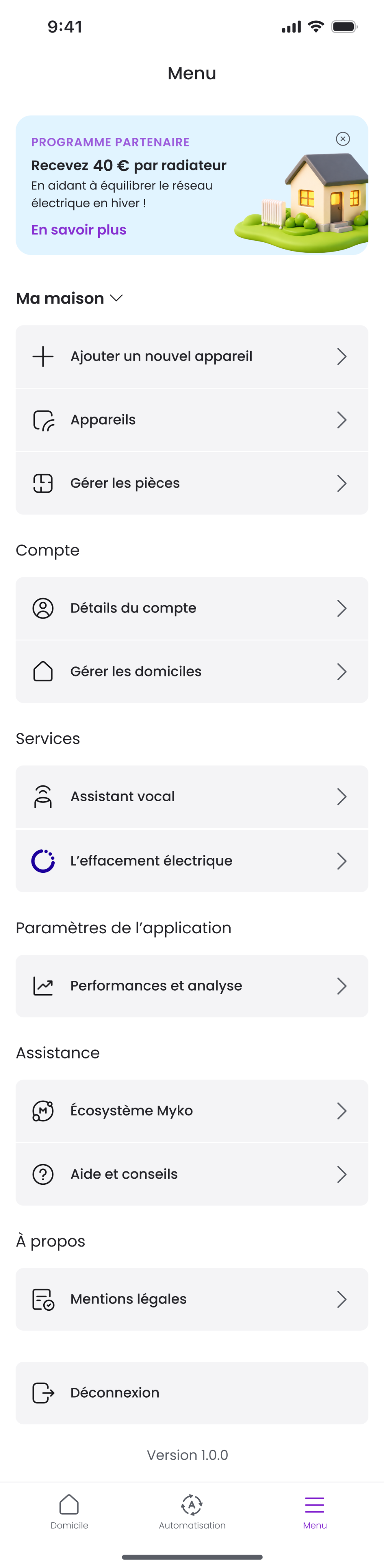
Discover from the menu
A partner banner introduces the offer, with a lasting entry under Services.
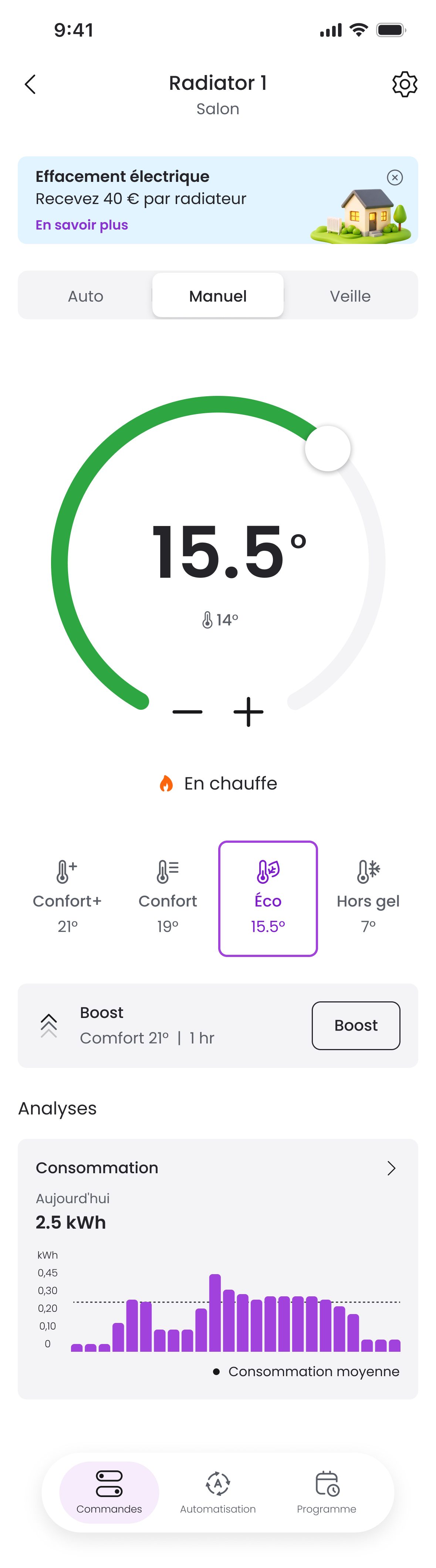
Discover from a radiator
An eligible radiator’s control screen introduces the offer where customers already manage their heating.
Understanding the offer
Explain the programme before asking people to join.
The landing page brings together the reward, how modulations work, compatible radiators and the commitment involved.
Scroll the phone to explore the offer. Switch on “Explore the offer” for a guided tour with English notes. The registration screens follow below.

Registration and validation
Keep the next step visible.
The journey brought together the offer, eligibility, commitment and consent, then explained what would happen during installation validation. Signing up and being ready to participate needed to stay distinct.
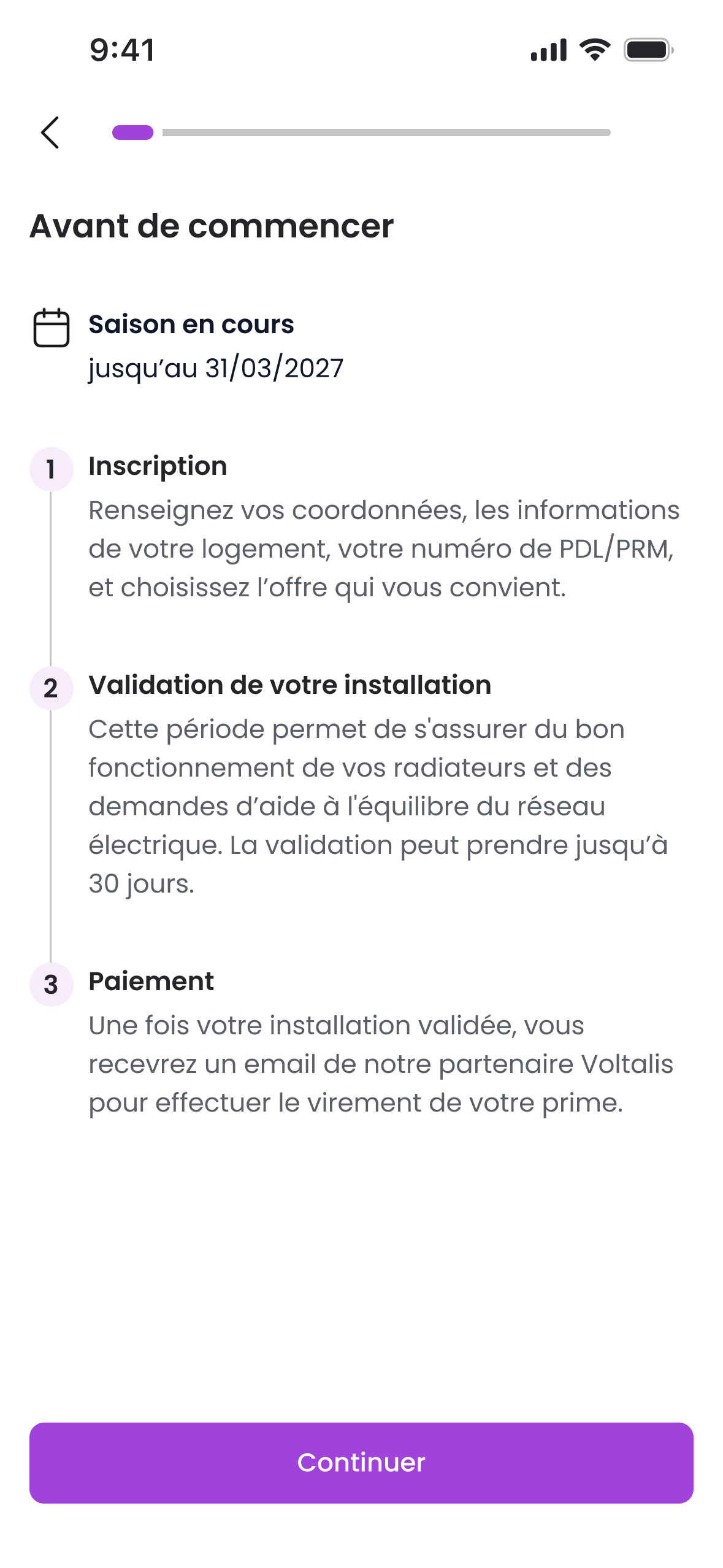
Explain the steps
Set expectations for registration, installation validation and payment.
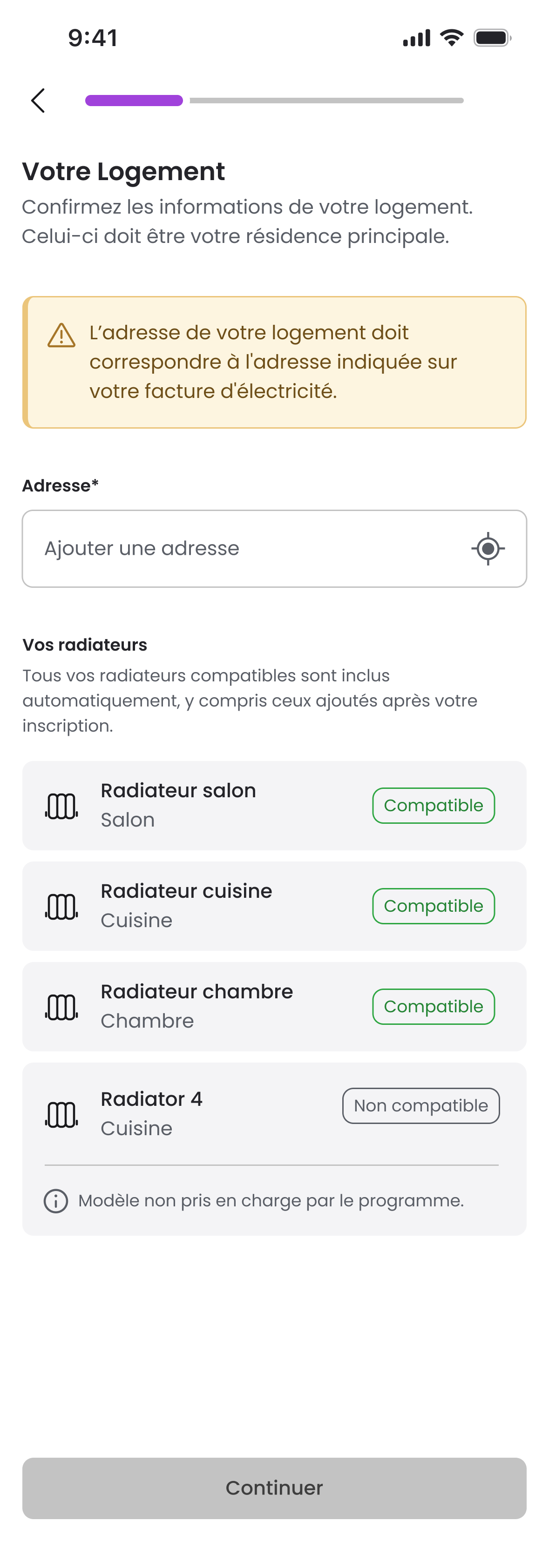
Choose the home
Identify the home and show which radiators are compatible.
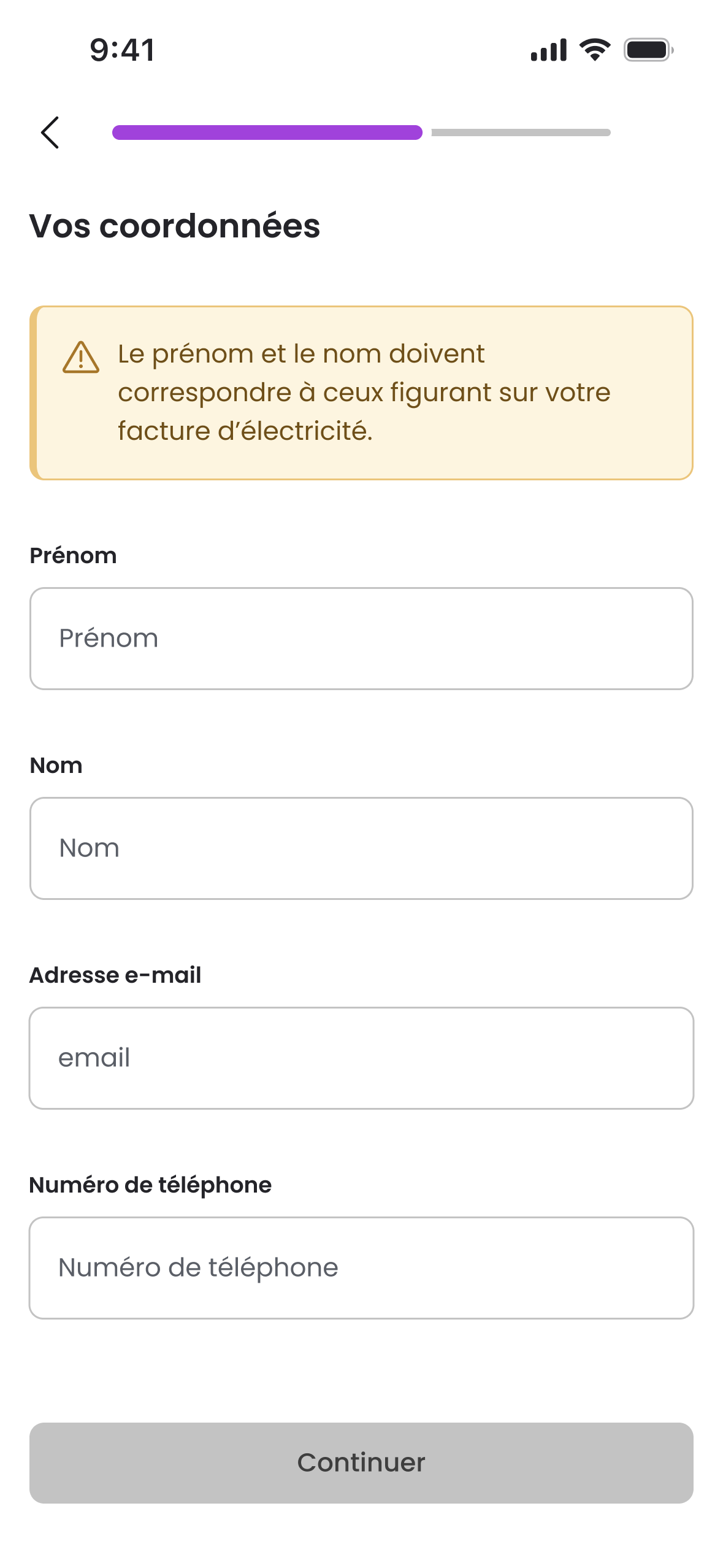
Collect the details
Ask for the information needed to register the household.
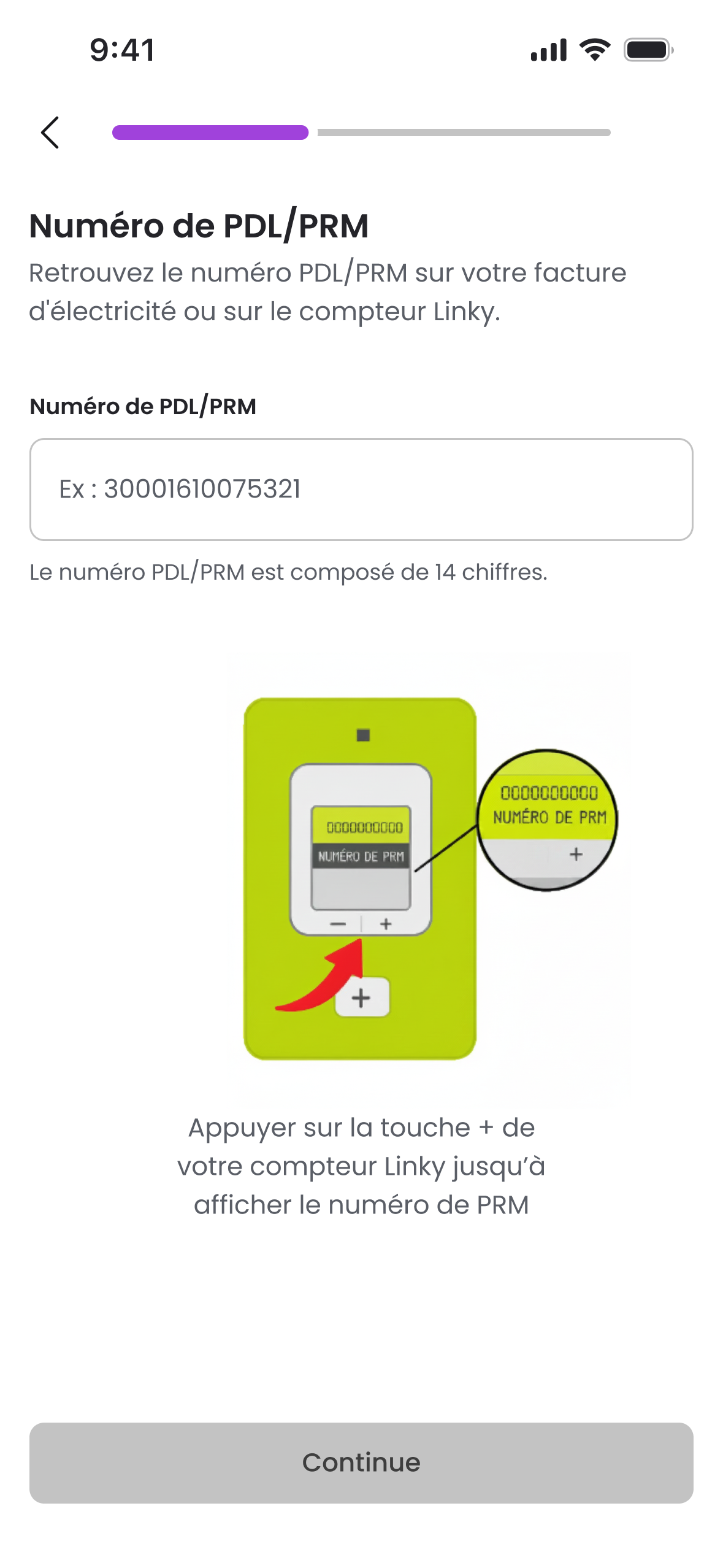
Find the meter number
Help customers locate the electricity supply identifier.
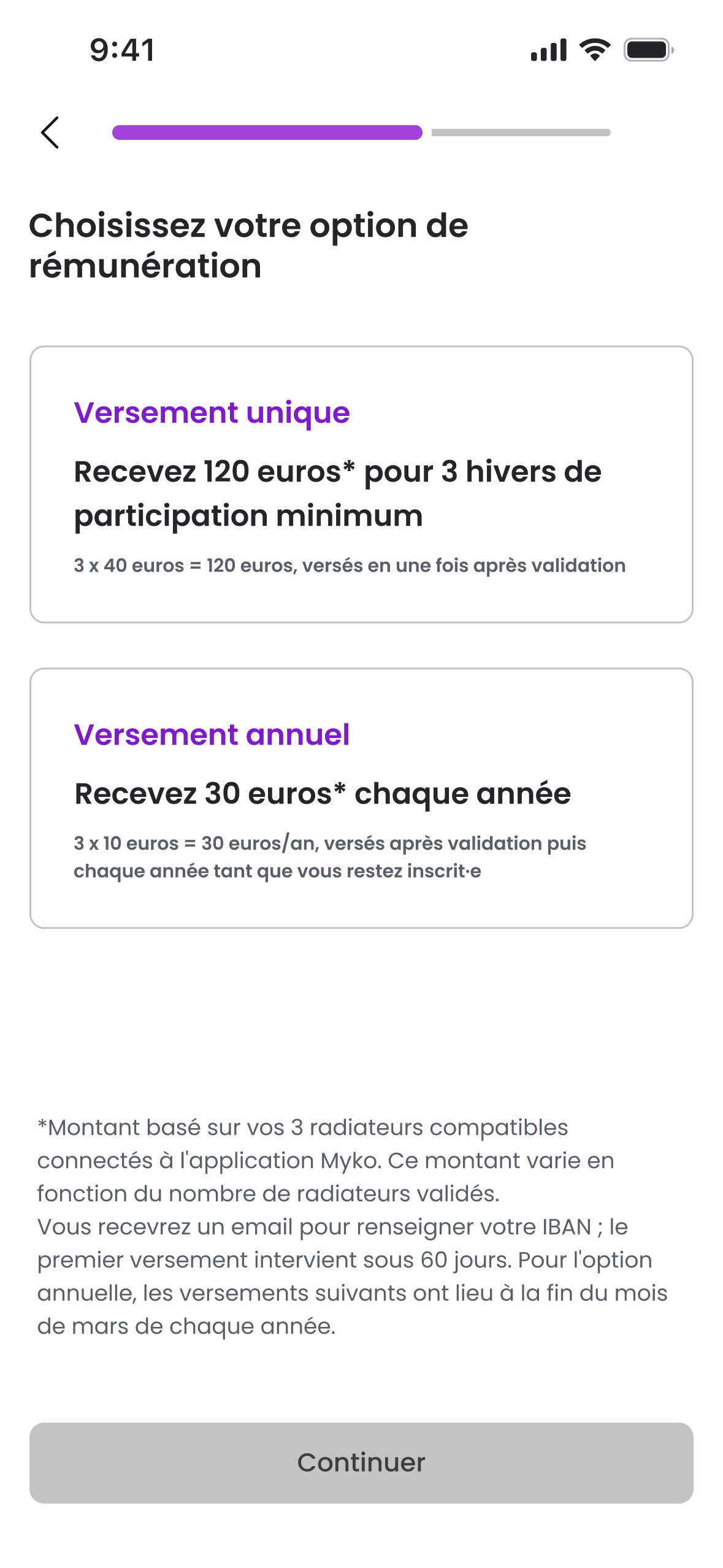
Choose the commitment
Present the payment options alongside their duration.
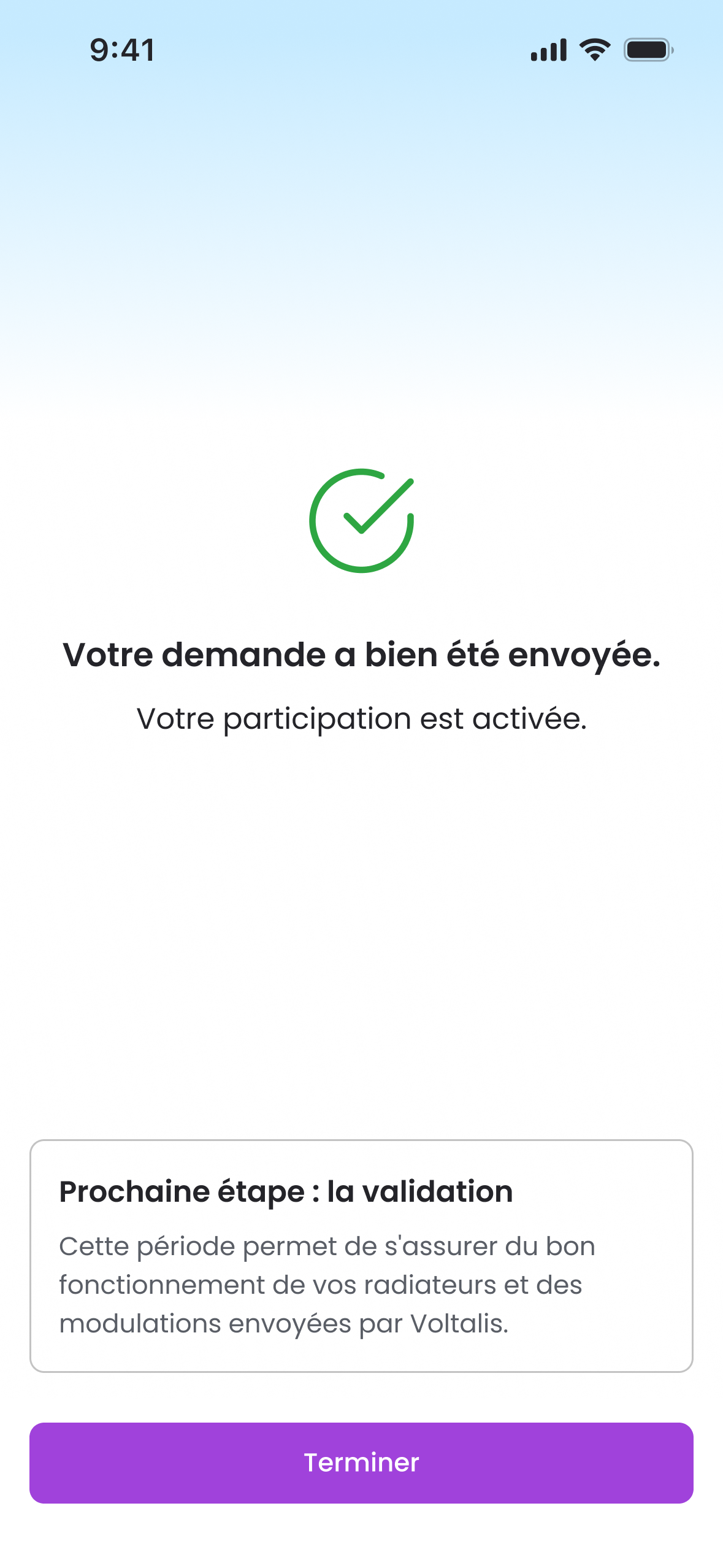
Confirm what comes next
Separate the submitted request from the installation validation still to come.
After registration
Make the installation status clear.
Joining the programme and completing installation validation are separate steps. The programme space shows whether validation is scheduled, in progress or complete.
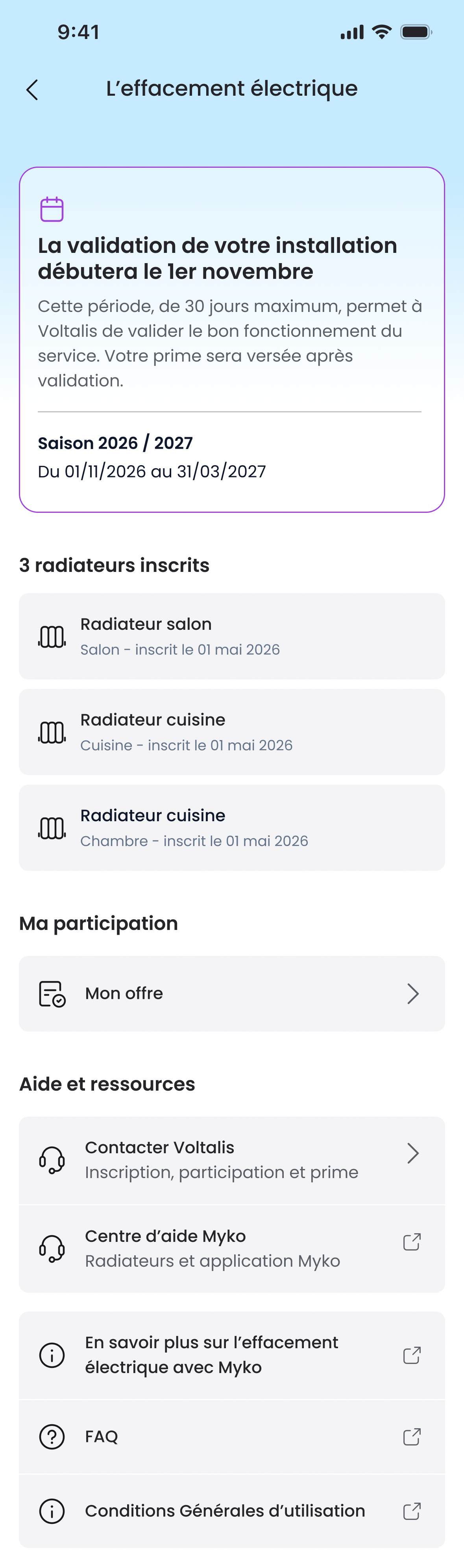
Validation scheduled
Show when installation validation will begin.
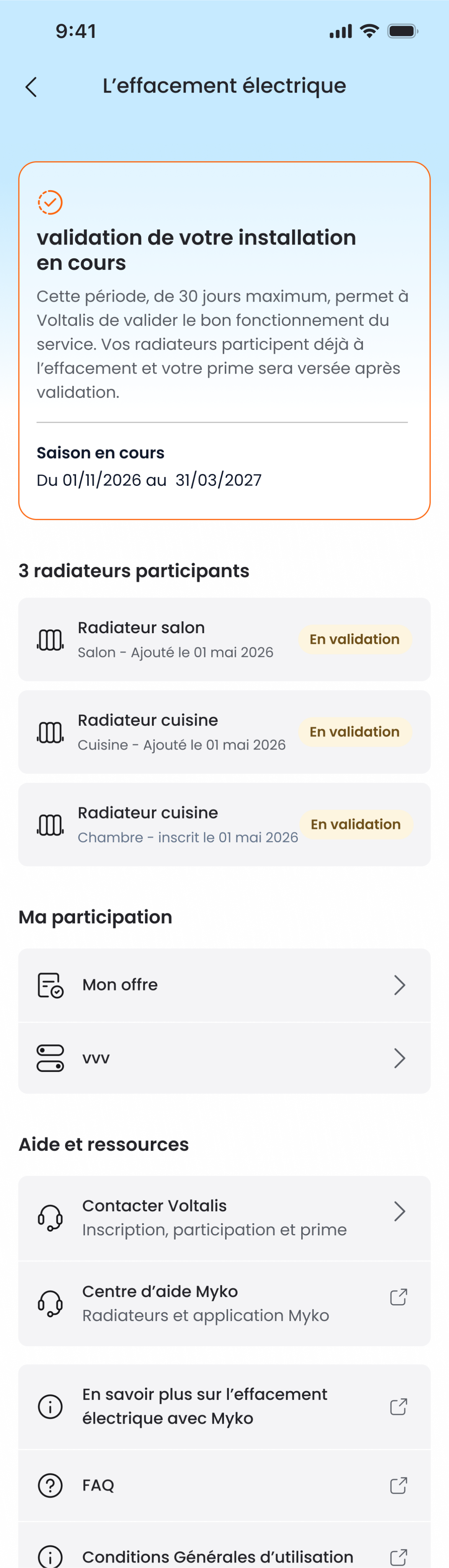
Validation in progress
Explain the installation check while it is happening.
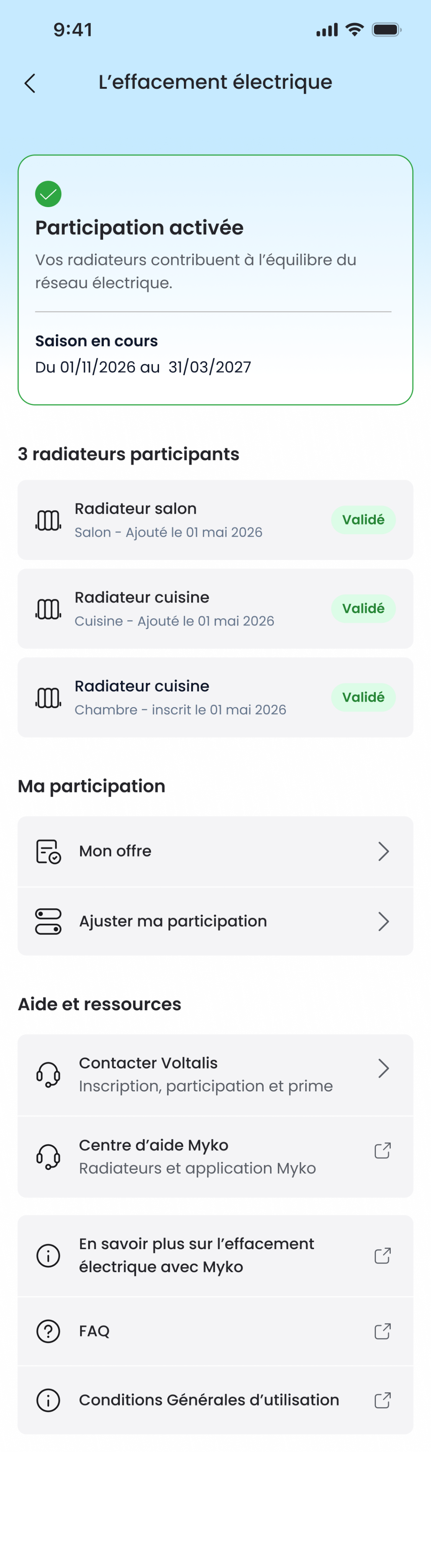
Participation active
Make the completed state distinct from joining and validation.
02.Keeping control after joining.
During a modulation
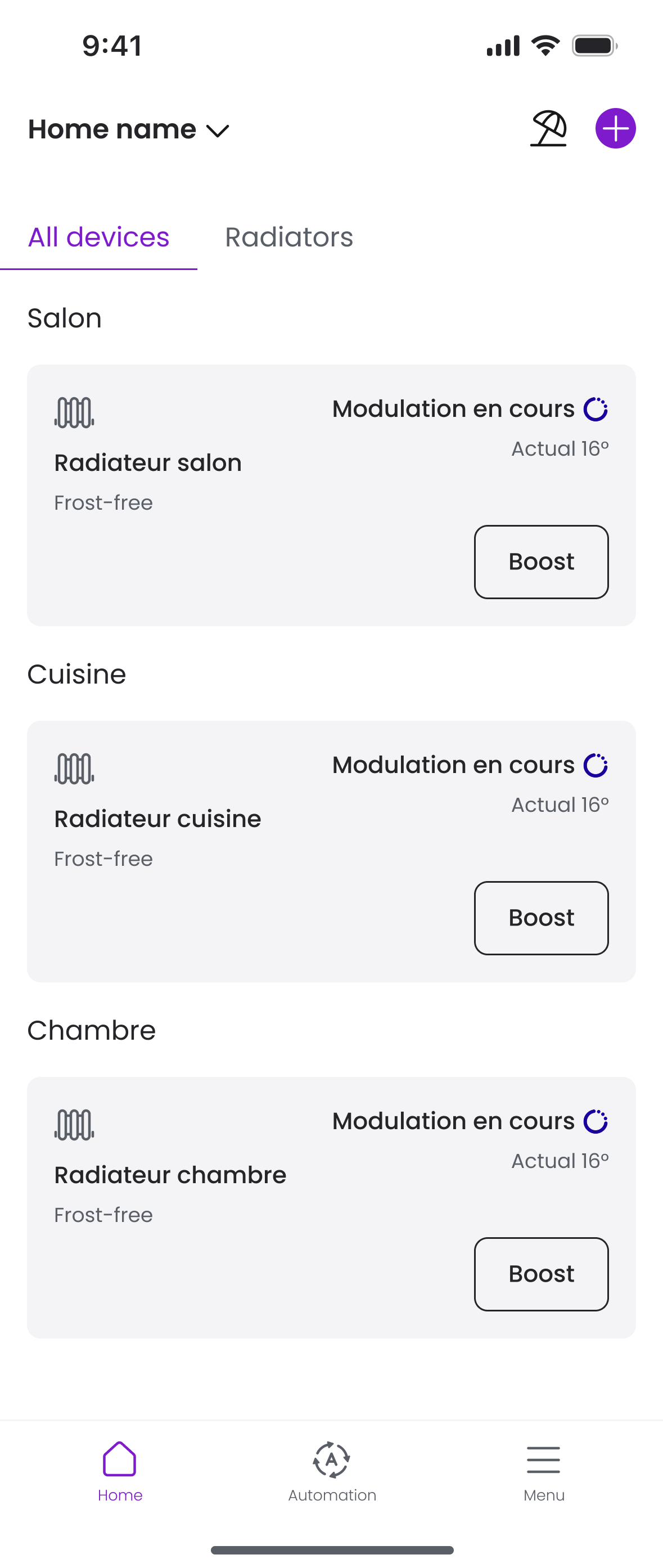
Show what is happening to the heating.
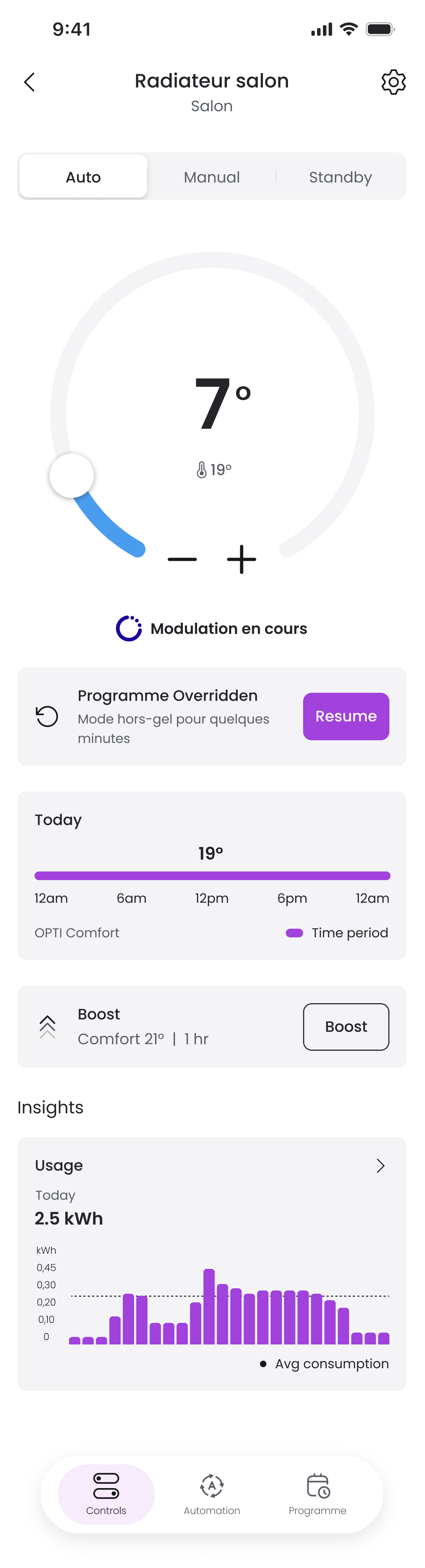
A temporary grid adjustment needed to be visible in the places people checked their heating. The radiator screen and the home page both showed when modulation was in progress.
The aim was to explain the change in context, rather than leave users guessing why their usual heating state had changed.
Managing participation
Give people options beyond leaving.
Customers could reduce the events, pause participation or leave the programme. Each route explained what would change, keeping those choices within the app.
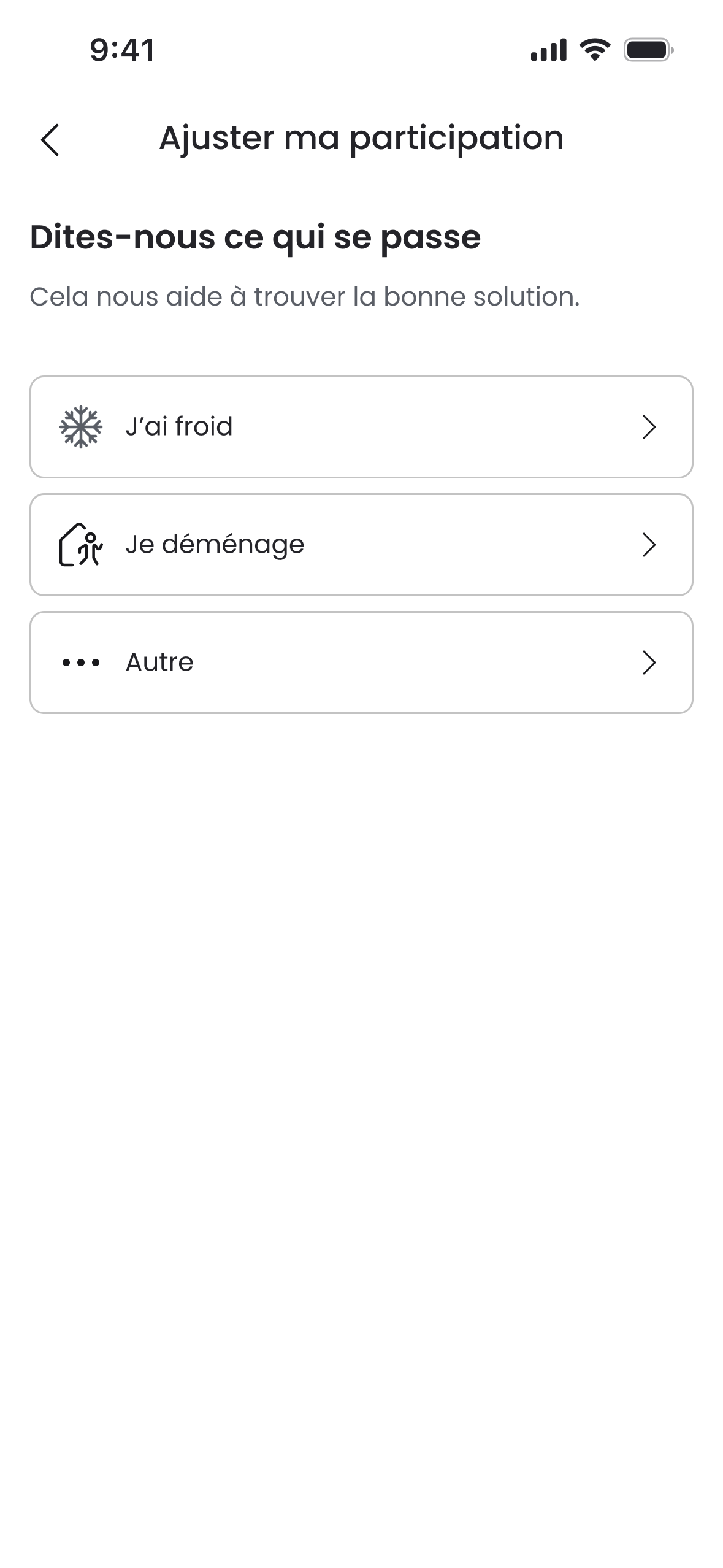
Adjust participation
Start with the customer’s reason for making a change, then guide them to the appropriate option.
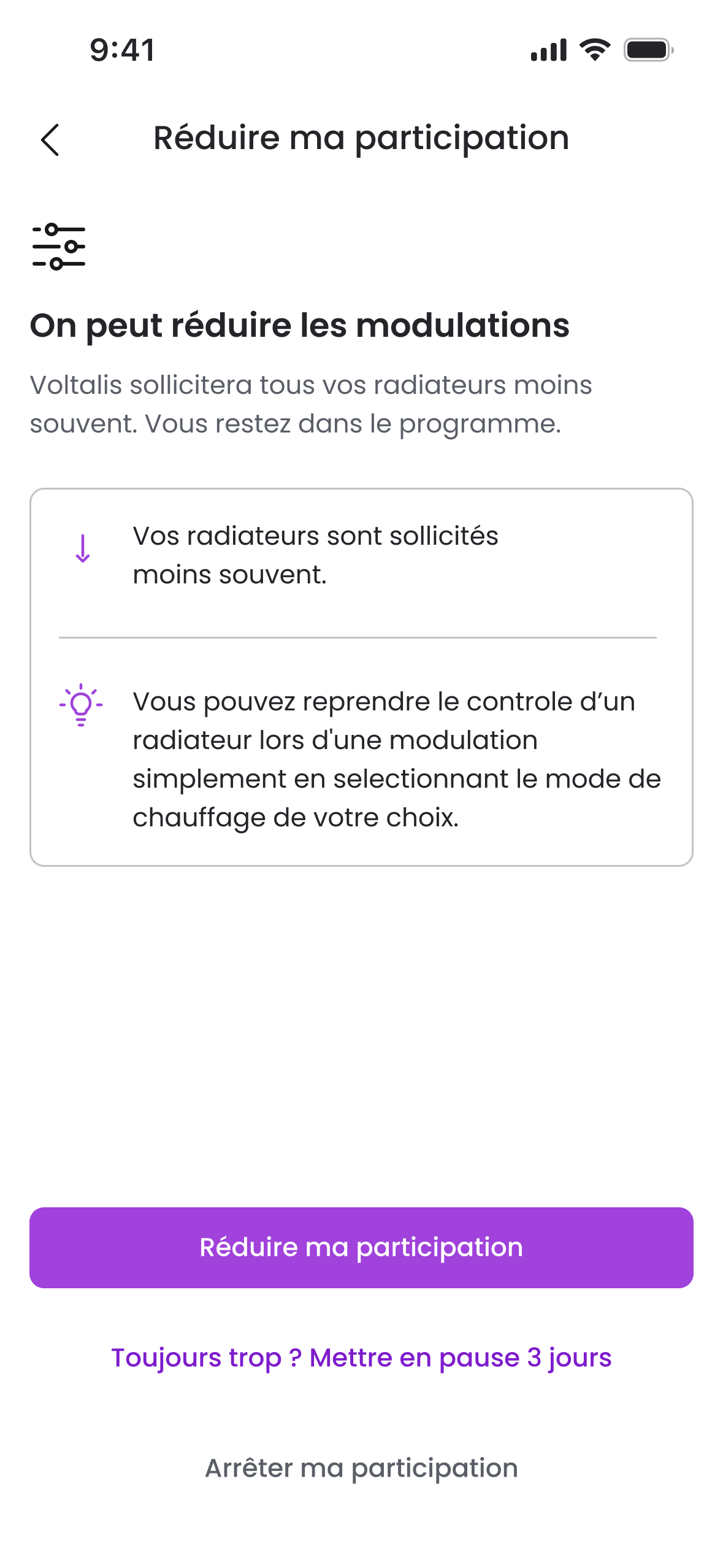
Reduce the events
Explain the option to take part in fewer modulations.
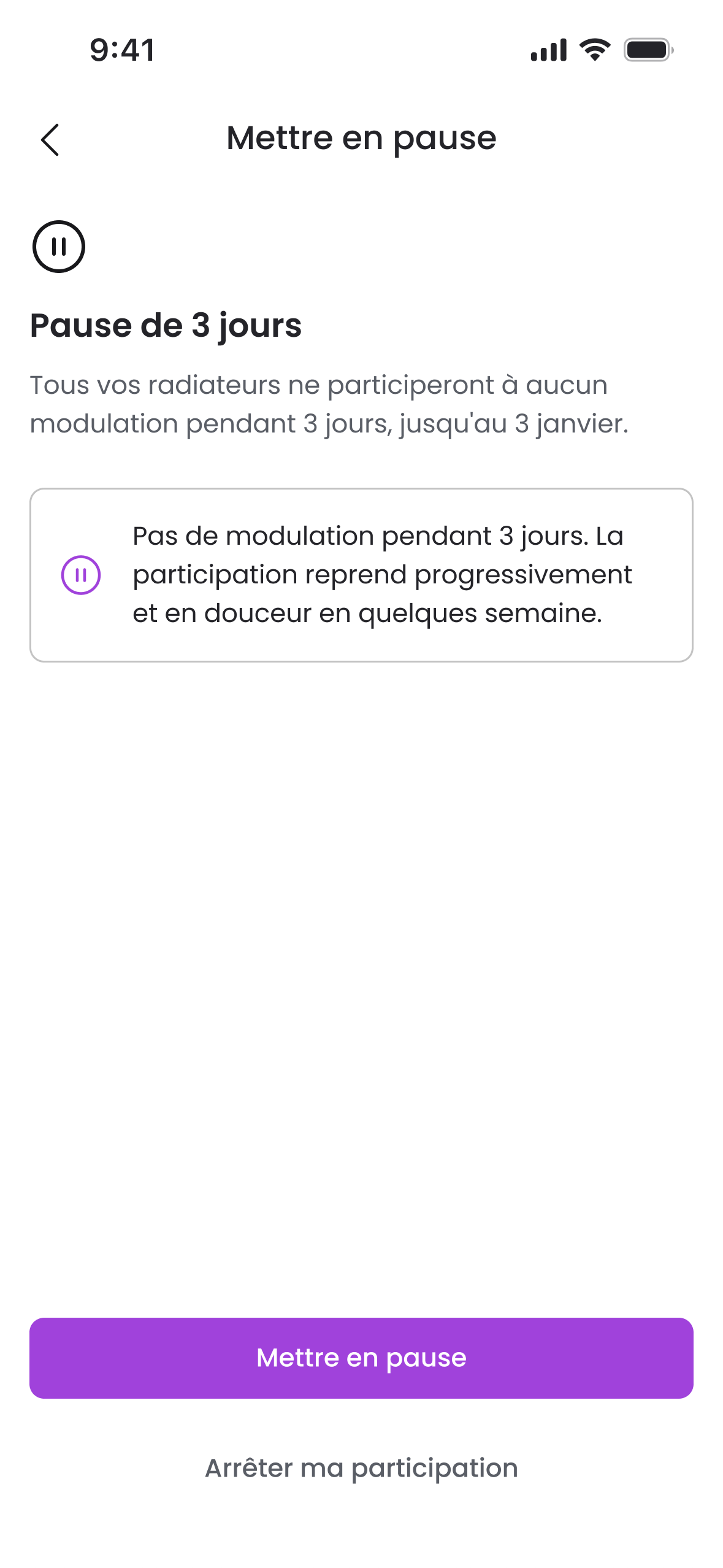
Take a pause
Make the three-day pause explicit before confirming.
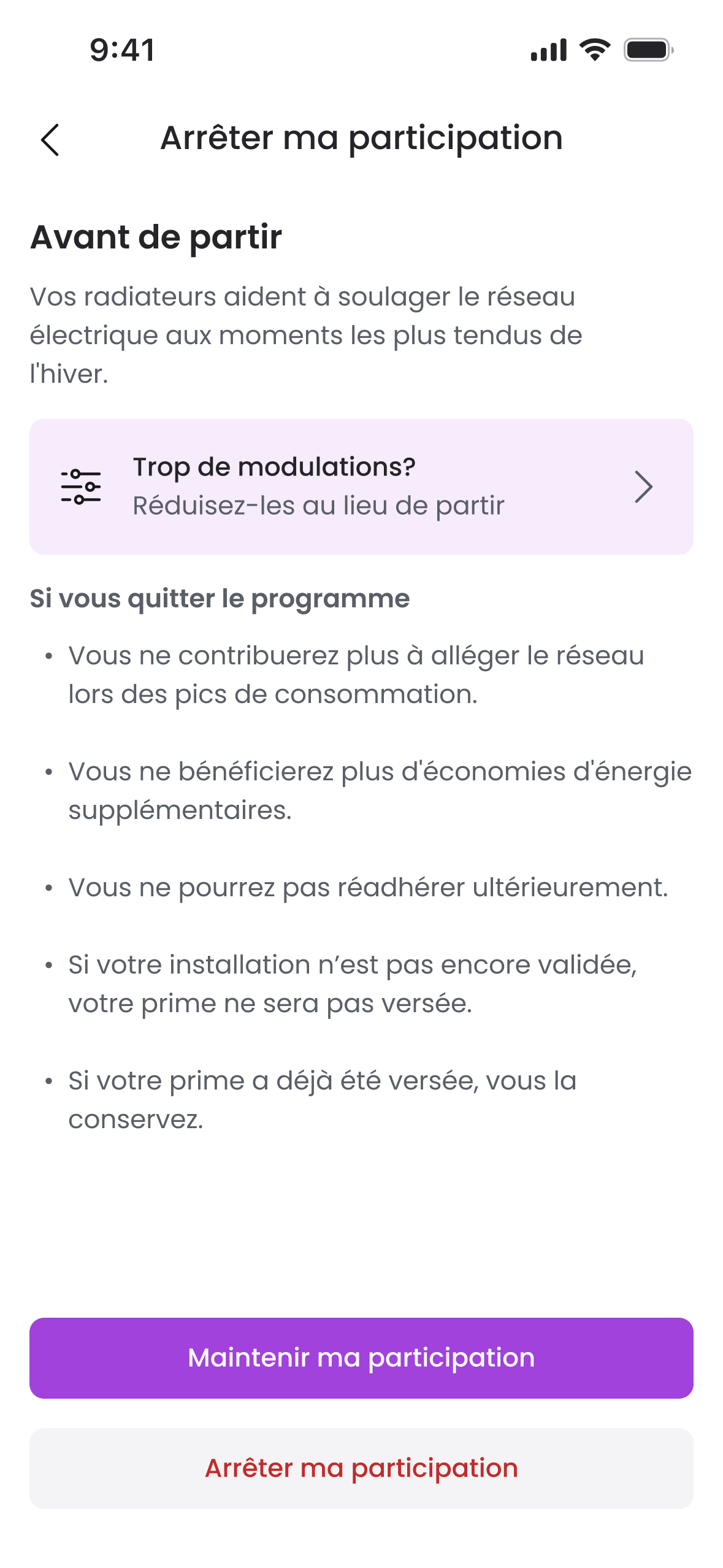
Leave the programme
Explain the consequences before confirming an exit.
03.Research that changed the journey.
Testing exposed two points of confusion: whether customers were ready to participate, and how much they would be paid. We revised the wording and checked understanding in follow-up sessions.
3 rounds · 11 valid sessions
In unmoderated tests, participants thought aloud as they explored the offer, joined the programme and managed participation.
01 · Installation status
Joining did not mean being ready.
- What we heard
- “Validation” left people unsure whether they were already enrolled or whether everything was complete.
- What changed
- We tied validation explicitly to the installation, with distinct wording for scheduled checks, checks in progress and active participation.
- Follow-up result
- 5 of 5 participants understood the revised status.

02 · Reward and commitment
A total reward sounded like an annual payment.
- What we heard
- “€120 across three winters” could be understood as €120 each winter.
- What changed
- We stated that the reward was a single payment for the full commitment, then carried that explanation through discovery and offer selection.
- Follow-up result
- 2 of 2 participants in the final round correctly explained the payment model tested.
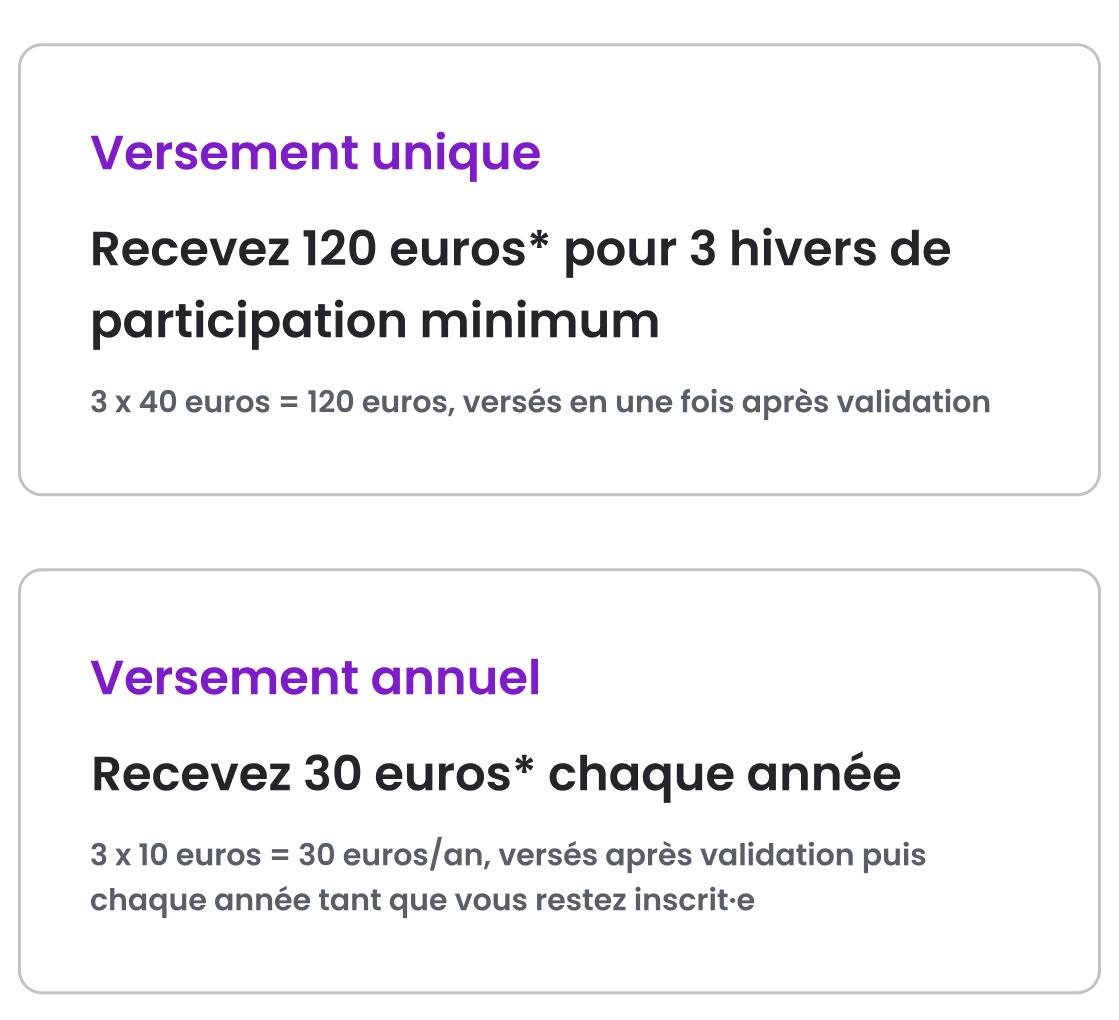
Screenshots show later designs carrying forward the wording principles. Research wording is translated from French; these small follow-up samples describe understanding in testing.
Other changes informed by testing
Make the offer easier to recognise.
We added an energy-partner label to the banner and named compatible radiators, with reasons when a product could not participate. These changes were not all formally retested.
Still unresolved
Explain when payment arrives.
Some participants expected payment at the end of the commitment. Payment timing needed to appear earlier in the journey.
What the work established
Evidence of clearer understanding.
Testing showed that specific changes improved understanding of the installation status and the reward model tested. It also exposed questions that remained open, particularly payment timing.
Those findings informed the design before launch. They do not tell us how many people would have joined, stayed in the programme or changed their energy use.